

“It seems reasonable to believe — and I do believe — that the more clearly we can focus our attention on the wonders and realities of the universe about us the less taste we shall have for the destruction of our race. Wonder and humility are wholesome emotions, and they do not exist side by side with a lust for destruction” – Rachel Carson
We are celebrating the World Environment Day, today. Every year, we talk about our renewed commitment to the Earth, the nature and the well-being of the planet. We are also reminded that there is no Planet B and educators are reminded of the need to bring this awareness in students and children. Indeed, the foremost challenge that our education must address today is that of large scale environmental degradation and its disproportionate impact on different sections of society.
Where does one begin?
Recently, I was watching a 2 year old, squinting very attentively at the soil, supporting himself in a semi-crawl, semi-sitting position. He had been following a group of older children, working on the garden, when his attention was caught by something in the soil. It was a beetle. He sat watching transfixed, his eyes darting to the left and right. When the beetle had accomplished what it was doing and went under the soil, he was perplexed, and poked his finger here and there, hoping to locate it. Finally, he seemed to accept that the beetle had other business to do and went about following the older children. The respect with which he observed and the calmness with which he moved on underscored for me how children can be influenced by the natural world. As I watched him, I was reminded of a quote from David Attenborough “No one will protect what they don’t care about; and no one will care about what they have never experienced”.
That is where we need to begin, allowing children to experience and care.
Relationship with life around
Our school education is characterized by a huge disparity in terms of access to educational opportunities. On the one hand, are the children in elite schools with access to multiple resources and on the other, are the children who have limited opportunities to learning beyond the school text. Yet, across this spectrum, children have very little opportunities to be connected with the living world around them.
The “environment studies” curricula informs children about trees and water and wild animals and pet animals; they are told about water conservation and waste management. However, children have little opportunity to experience the natural world. Children need to experience nature – explore and observe. They need to participate in the natural world, have opportunities to work with the land, plant trees and grow gardens and watch insects and birds. They need to intuitively know themselves to be part of this natural world.
This relationship with life around is what will help children develop an understanding of their environment – the living world and the social world. Knowing ourselves to be a part of the total ecology is the foremost objective of environment education.
Environment education at Kaigal
This proximity to the natural world, respect for all life and working in harmony with what is around constitutes the core of the environment education program at Kaigal.
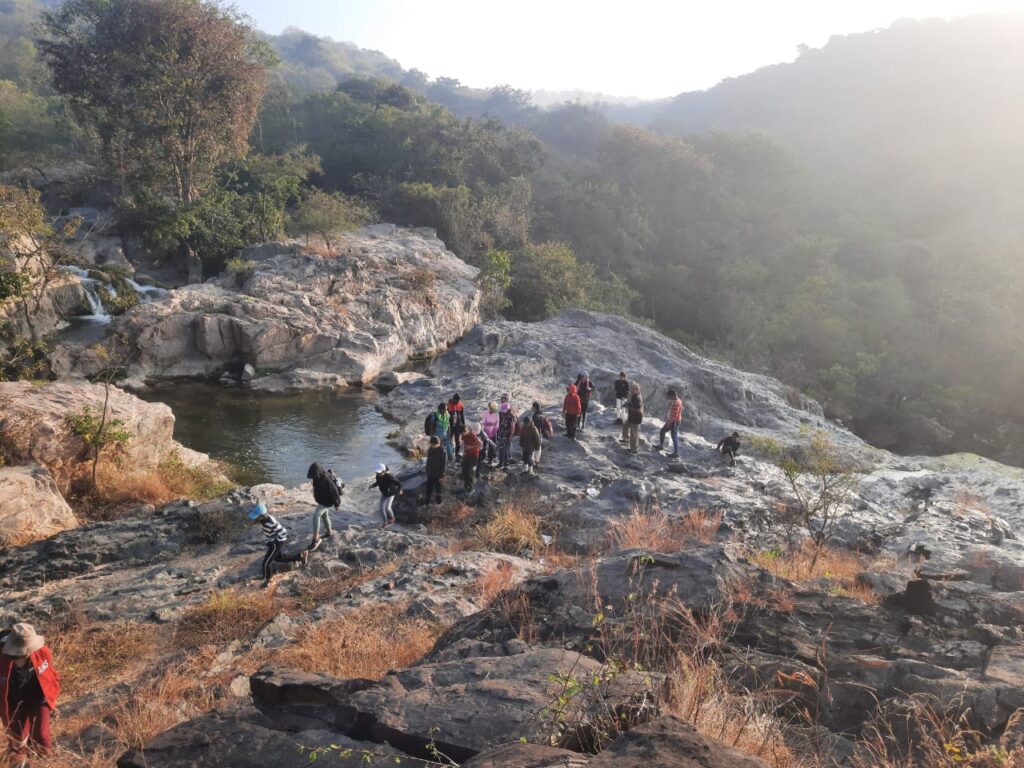
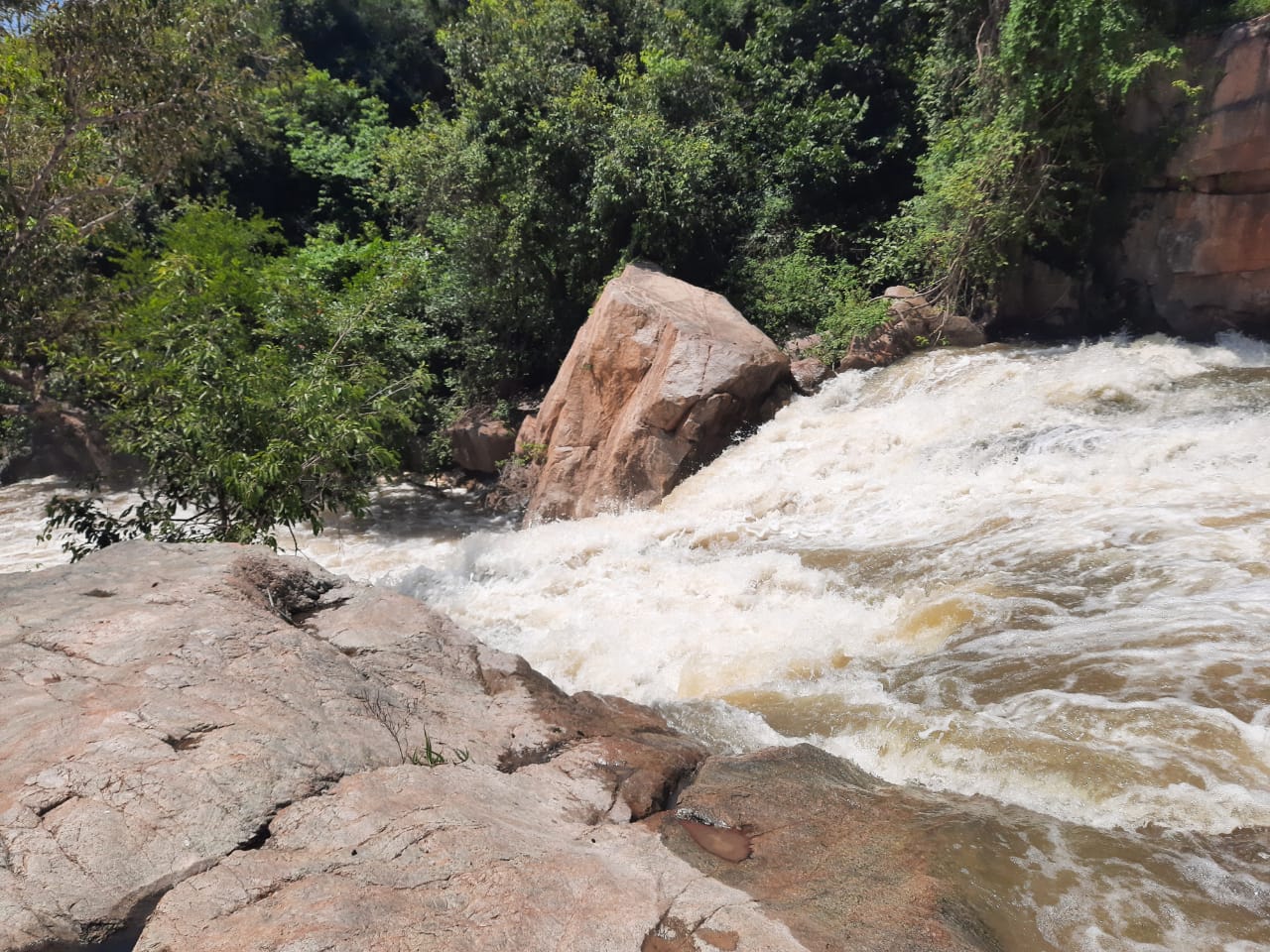
The program began in 2007 with the objective of sharing with students, the possibilities, challenges and strategies for a sustainable and ecologically responsible way of life. It is conducted out of the Kaigal conservation centre in a campus adjoining the Kaundinya Wildlife Sanctuary. A stream from the seasonal Kaigal river straddles the place and when the rains fail, the barren rocks complete the landscape. The forest here is dry deciduous and is rich in biodiversity though often carelessly referred to as scrub jungle. It is home to an elephant corridor and the Yanadi tribe, whose members are forest collectors. The understated landscape with its forests and streams and metamorphic rocks carries its own majesty, with an utterly different way of life, barely 3 hours from Bengaluru.
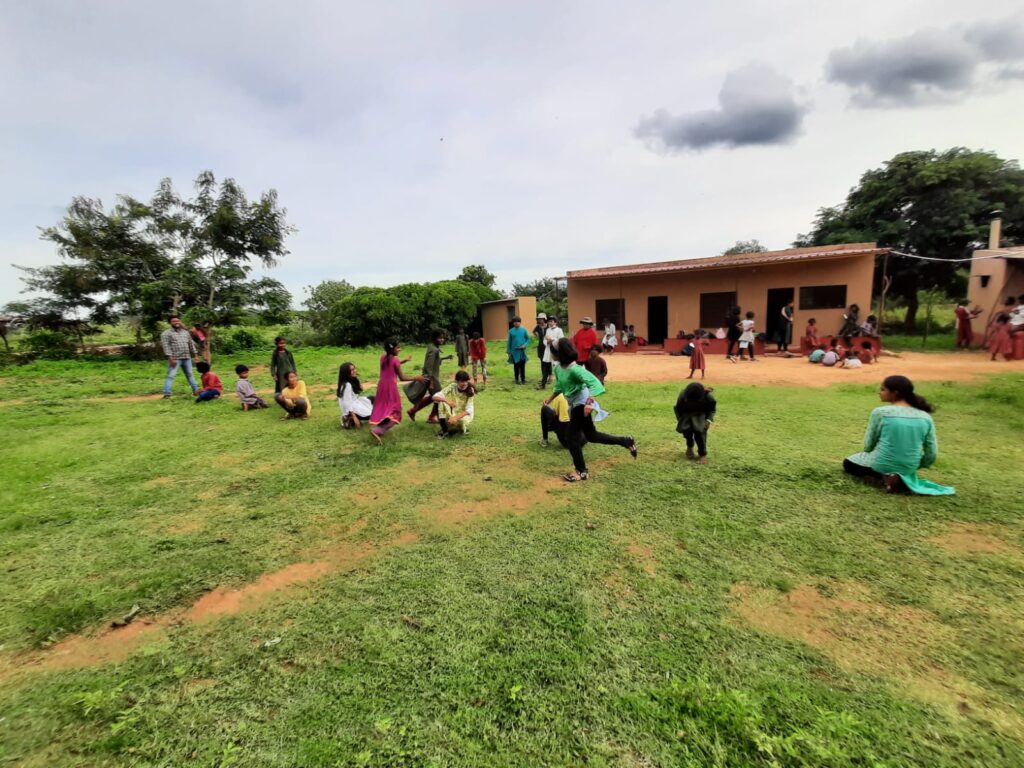
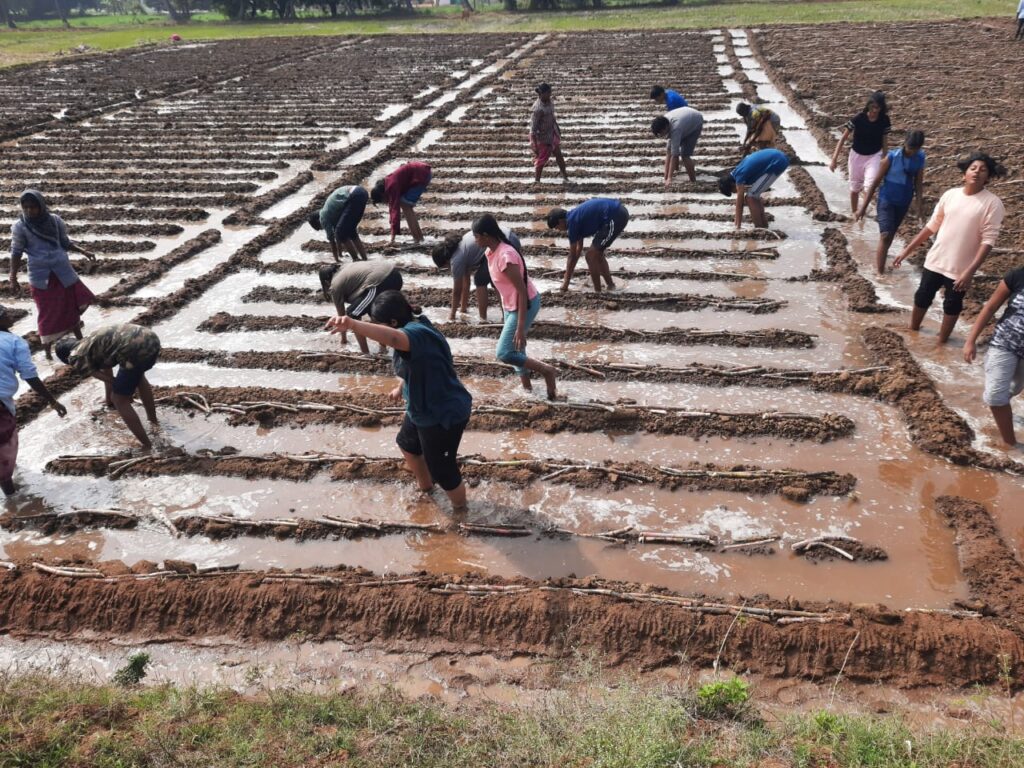
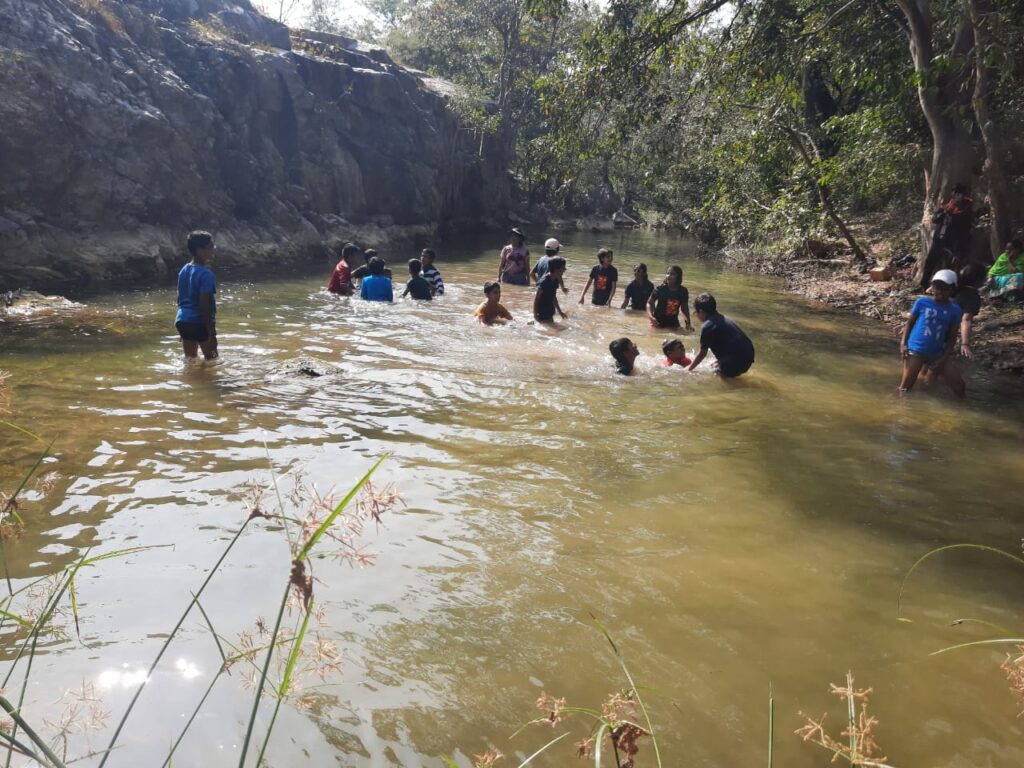
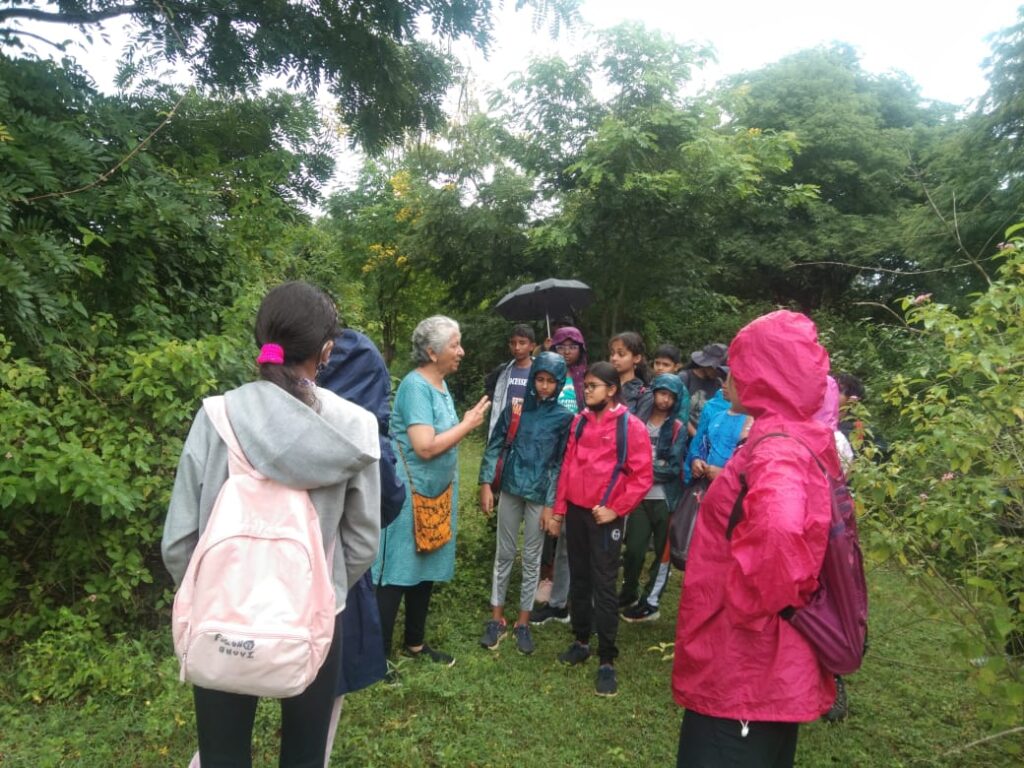
Structured as a residential program, the activities will typically include forest walks, working in the local farms, preparing seeds for planting, working the forest nursery in the conservatory, interacting with the local communities and gathering data on their agricultural practices, gathering data on forest bio-resources, working with children in the local schools and such other activities, all closely linked to the local environment. A walk through the forest – during the day and at night, with only the moon and the stars, completes the program. Food is an essential part of the experience and all the meals are cooked from locally sourced materials, and prepared by the local community. In all these activities, the children are guided by the resource persons from the rural and tribal communities, an experience that is valuable in more ways than one.
Educating to conserve
The children – young and old – usually arrive noisily, tumbling out of their buses and trains but fall into a reflective silence towards the end of the program – taking in the sights and sounds and smells of the natural world — a transformation that all of us who have facilitated the program have observed. Most often for children, two things stand out in their experience – the beauty of life around them, even in seemingly stark landscapes and an appreciation of the knowledge and skills of the people in communities so different from theirs. When interacting with the communities, older children often notice the challenges of resources and the impact of ecological damage. Over the many years, more than a dozen schools have brought hundreds of children to this program and often share how the program has impacted them and how differently so.
Conserving the environment requires us to see ourselves as a part of the natural world and working with the communities embedded in the environment. We have a long way to go; but the programs at Kaigal seem to be useful sign posts for this journey.